I’ve sourced a lot of earbuds over the years. Open ear is the category that’s kept me busiest lately. Every other week a client asks me the same thing. “Can you find us a reliable open ear earbuds manufacturer?” So here’s my honest take, from someone who’s actually done the legwork.
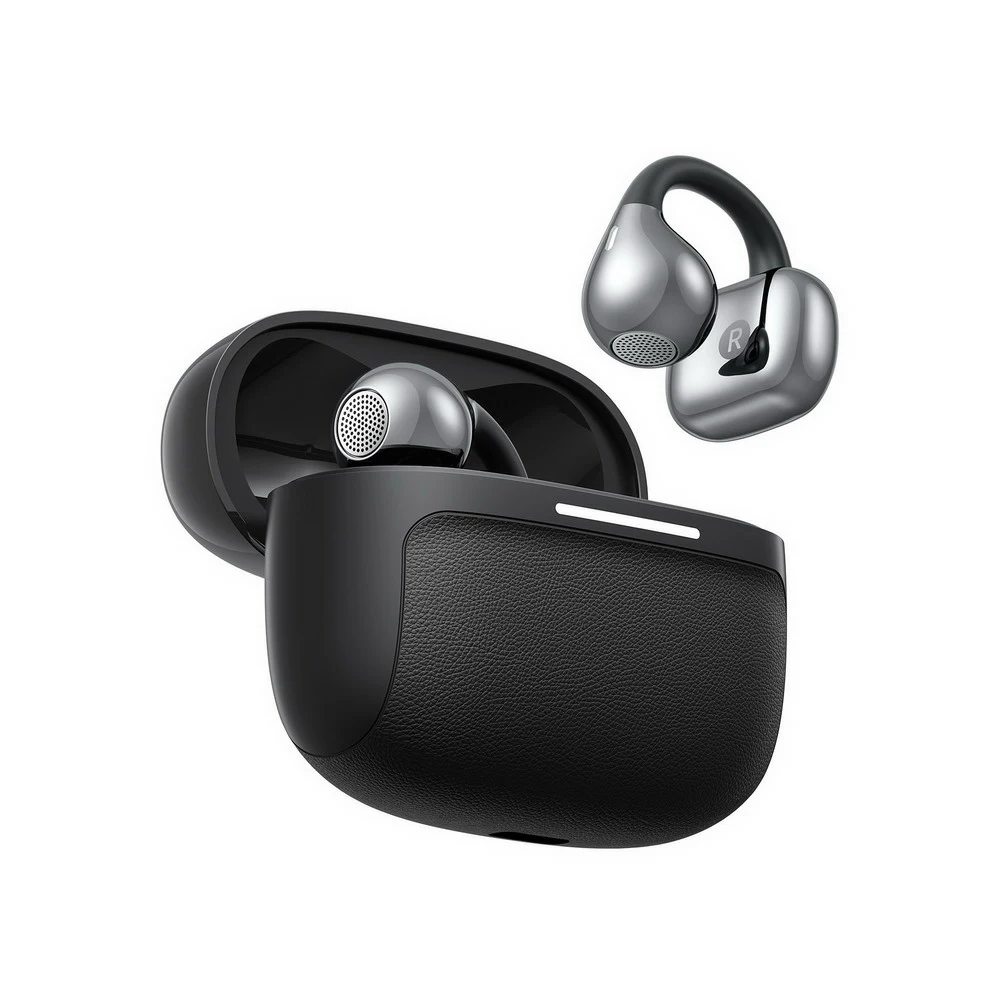
Why Open Ear Blew Up
People want awareness, not isolation. Runners need to hear traffic. Office workers want to stay half-tuned to their surroundings. That’s the whole appeal of open ear design.
It’s not bone conduction, by the way. Bone conduction vibrates against your skull. Open ear earbuds / air conduction earbuds sit near the ear canal instead. They project sound outward, not through bone. This distinction trips up a lot of buyers. Get it right in your product copy. Customers notice when brands get it wrong.
The Manufacturing Side Is Trickier Than It Looks
Sourcing open ear isn’t like sourcing standard TWS. You need ergonomic ear-hook engineering. You need sound leakage control. You need IPX-rated water resistance for sport use. Not every factory has retooled for this. Some are still using old sealed-earbud molds and calling it “open ear.”
What I Actually Check on a Factory Visit
Chipset platform. Most solid open ear builds run on Qualcomm QCC, Airoha, or BES chips. Jieli shows up on budget SKUs. Ask which platform they recommend. Ask why. If they can’t explain the tradeoffs, walk away.
Codec support. SBC is the baseline everywhere. AAC helps on iOS. aptX or LDAC matters if your buyer wants better audio. Open ear won’t sound as tight as sealed IEMs. But codec choice still shapes the listening experience.
Certifications. This part isn’t optional. FCC and CE are required for US and EU markets. RoHS compliance is expected as standard now. UN38.3 documentation covers the battery for air freight. I’ve seen shipments stuck at customs over missing UN38.3 paperwork. UKCA is separate from CE post-Brexit. Don’t assume one covers the other.
OEM vs. ODM. This confuses a lot of first-time buyers. OEM means you bring your own design. ODM means you customize an existing platform. ODM gets you to market faster, often in four to six weeks. Full custom OEM builds can take three months or more.
MOQ and pricing. MOQs for open ear range widely. Existing ODM shells might start around 500 units. Custom tooling usually pushes that to 3,000 or more. Ask for itemized quotes. Tooling costs, unit costs, and packaging should be separate line items. Bundled pricing makes negotiation harder.
Where These Factories Actually Cluster
Shenzhen, Dongguan, and Huizhou dominate this space. The Pearl River Delta has everything close together. Drivers, batteries, PCBA, and injection molding are all nearby. That proximity cuts lead times noticeably.
Tashells Audio, based in Shenzhen, is one manufacturer I’ve worked with directly. Their open ear ODM shells are already validated for air conduction acoustics. That saves you from paying full R&D costs if your specs are fairly standard. Their certification turnaround has also been consistently fast. That’s usually where other factories slow things down.
A Few Things I’d Tell Any First-Time Buyer
- Test sound leakage yourself, in a quiet room, with someone standing next to you.
- Ask for real battery cycle test data, not just a spec sheet claim.
- Check the silicone grade on the ear hook. Cheap silicone shows up fast in reviews.
- If you’re selling on Amazon, get compliance documents locked in early. Fixing this mid-launch is painful.
Open ear still has real room to grow. But the manufacturing bar sits higher than standard TWS sourcing. Do your homework before you commit. It saves you from a delayed launch later.